
A village built around a meeting place.
Explore Amazigh heritage, hospitality, market life and dishes such as tagine, harira, sfenj, khobz and harcha in Aïn Hamra.
Amazigh identity
Aïn Hamra belongs to the historic Igzennayen area of the Rif. Its Amazigh name, Tala Tazeggʷaɣt, ties language, landscape and identity together.
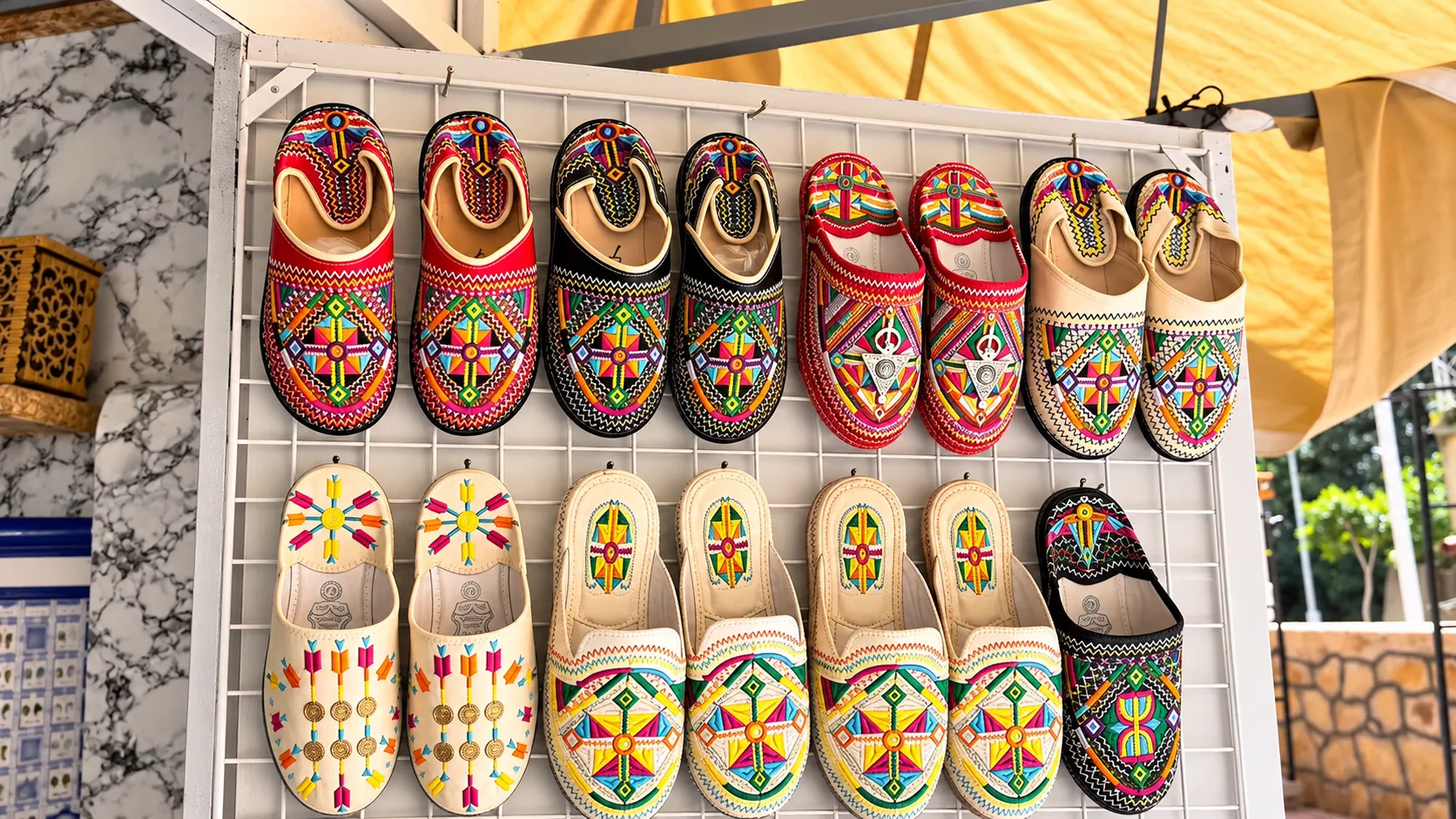
Life around the spring
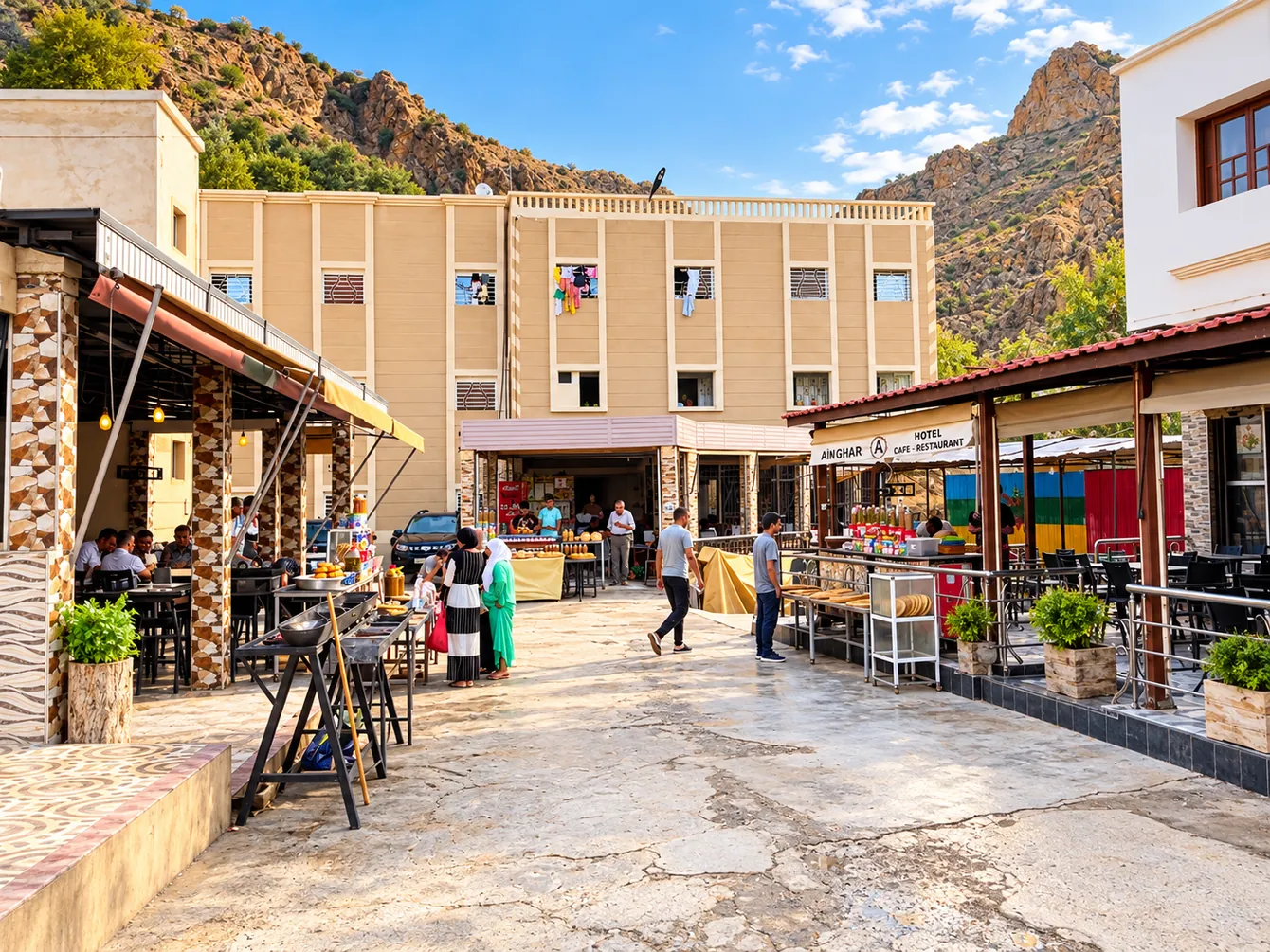
The spring is a gathering point: people collect water, stop by small cafés and meet friends and family. These ordinary moments are what make a visit special.
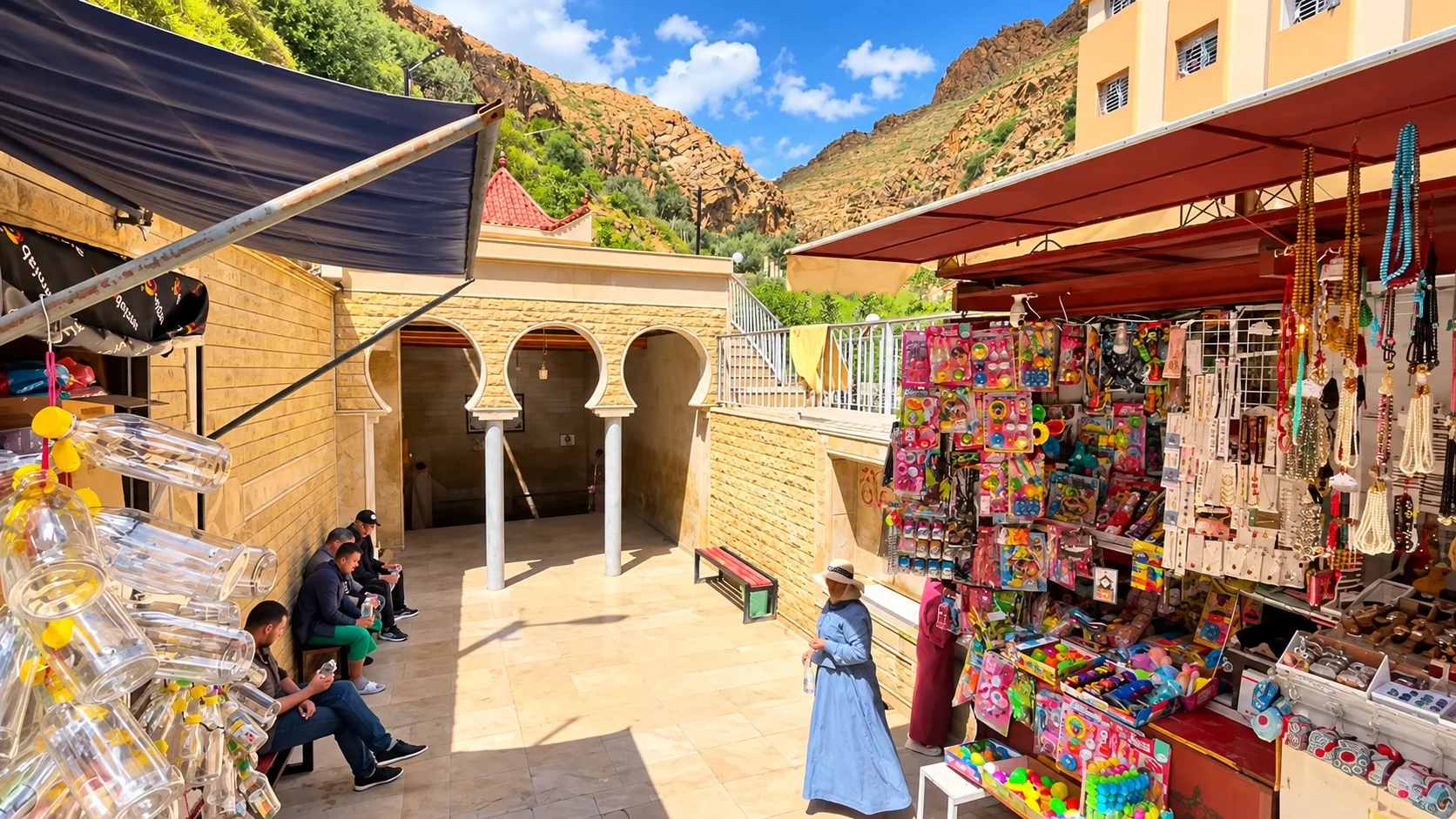
Visiting respectfully
Ask before photographing residents. Support small shops and respect local customs, family privacy and the fragile landscape.
Everyday life is part of the story
Culture is not confined to the past. It lives in conversations, small encounters and the ways residents use shared spaces. This website hopes to make room for local voices without claiming to speak for them. Residents, craftspeople and business owners can help tell a more complete story of Aïn Hamra.
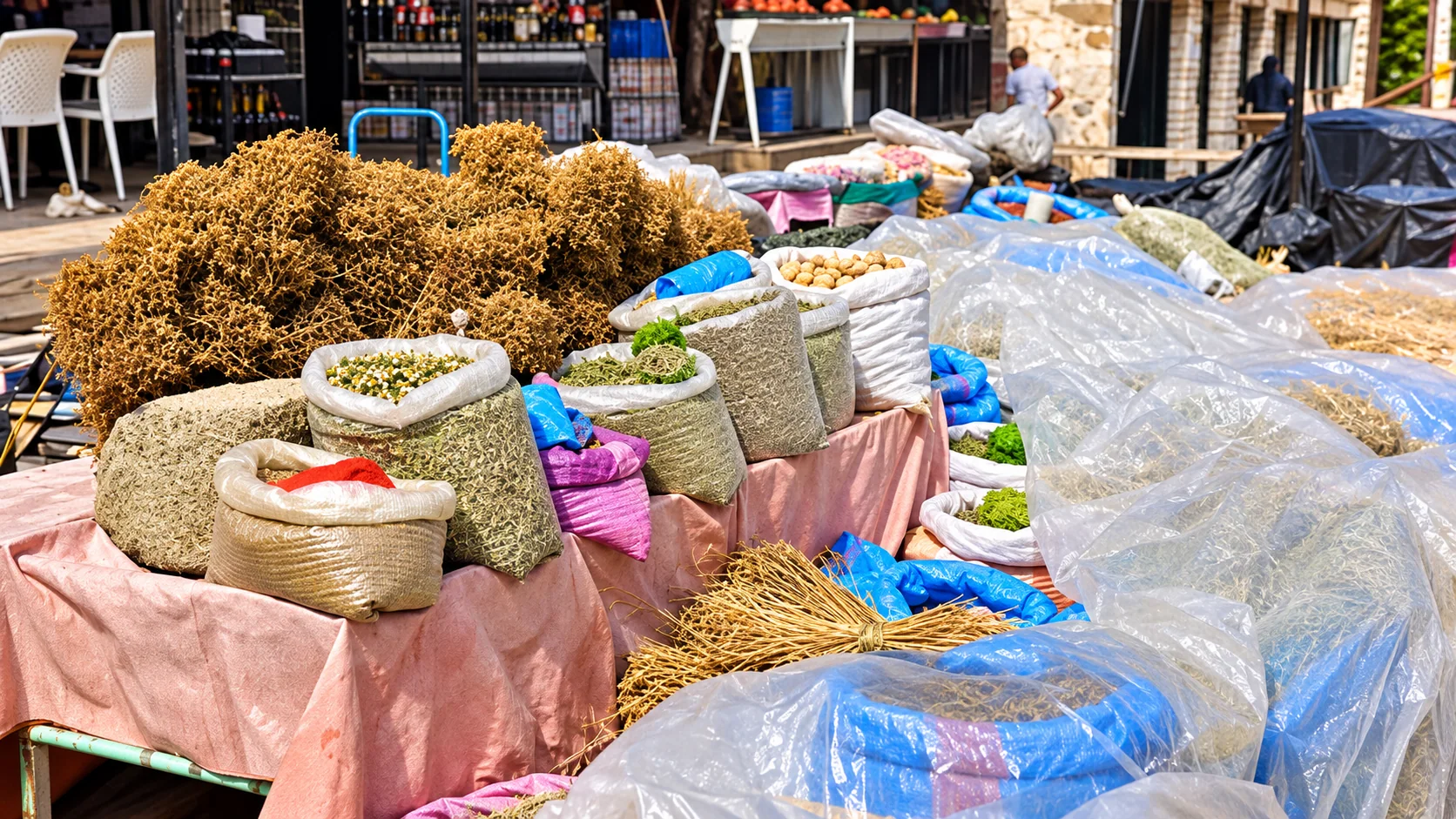
At the market: samak (fish) and the rhythm of the day
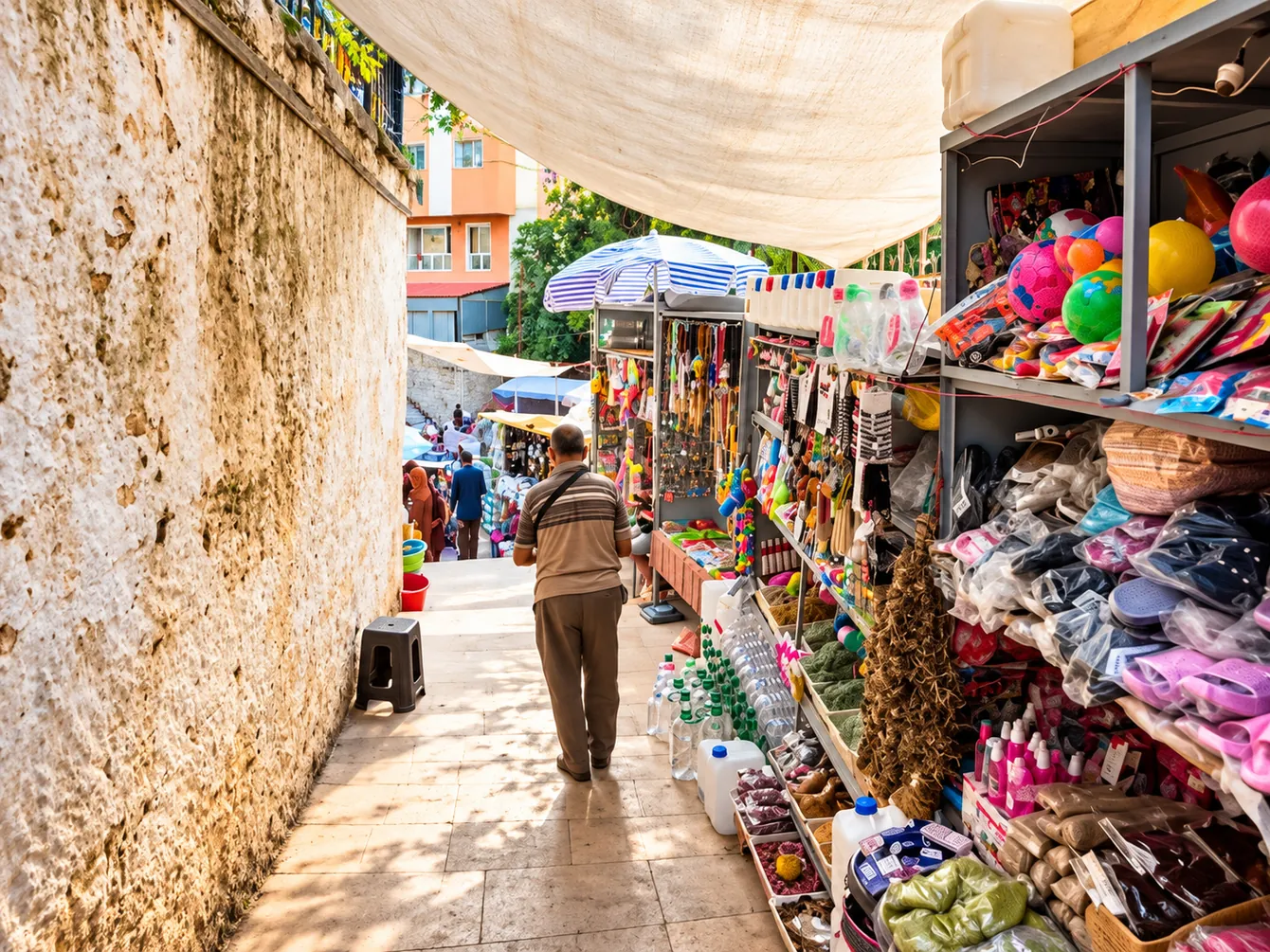
The market shows the everyday rhythm of Aïn Hamra. Fresh samak (fish) and other products are on display while visitors pause for a chat or a small purchase. The market is therefore both practical and social.
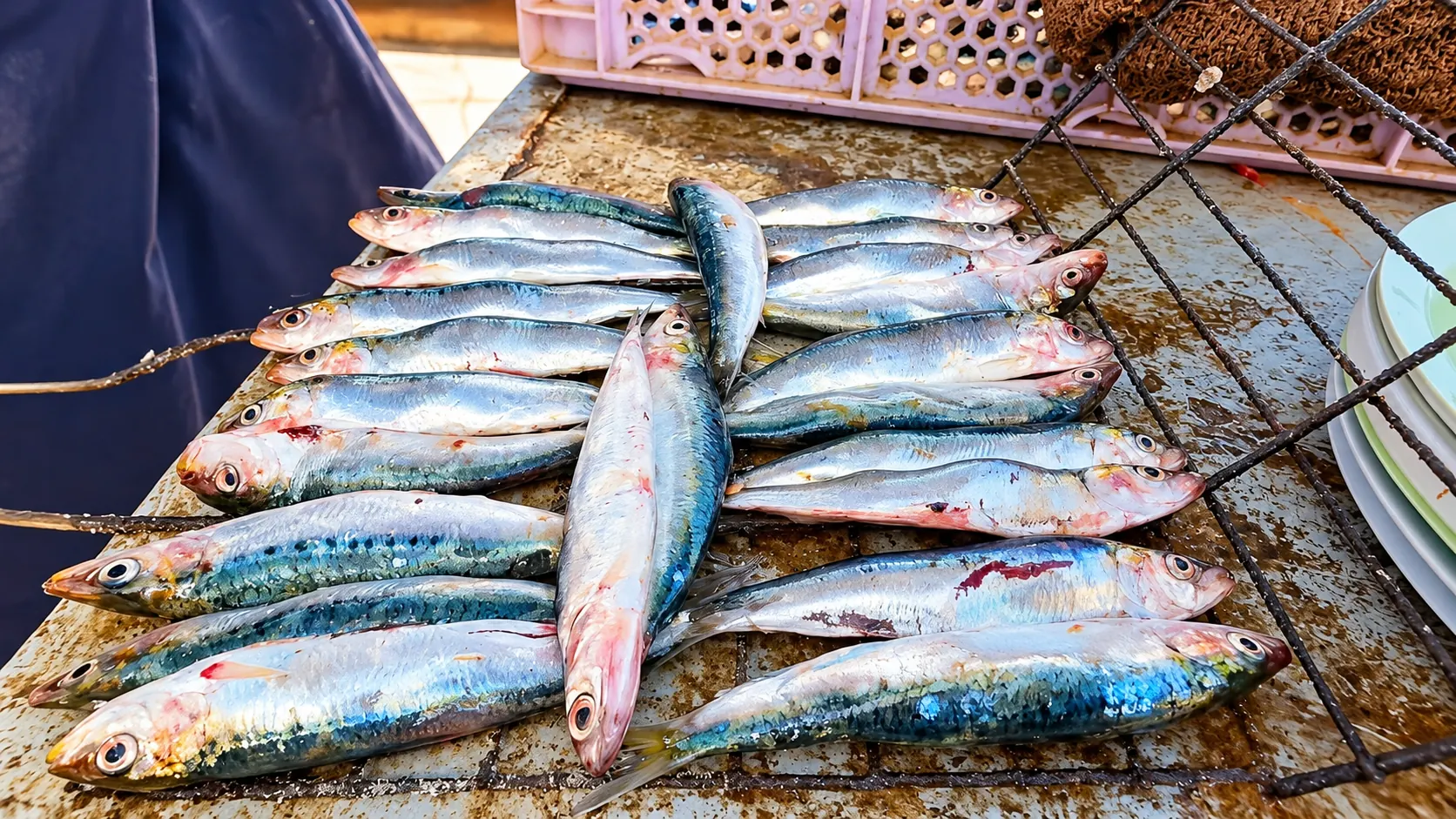
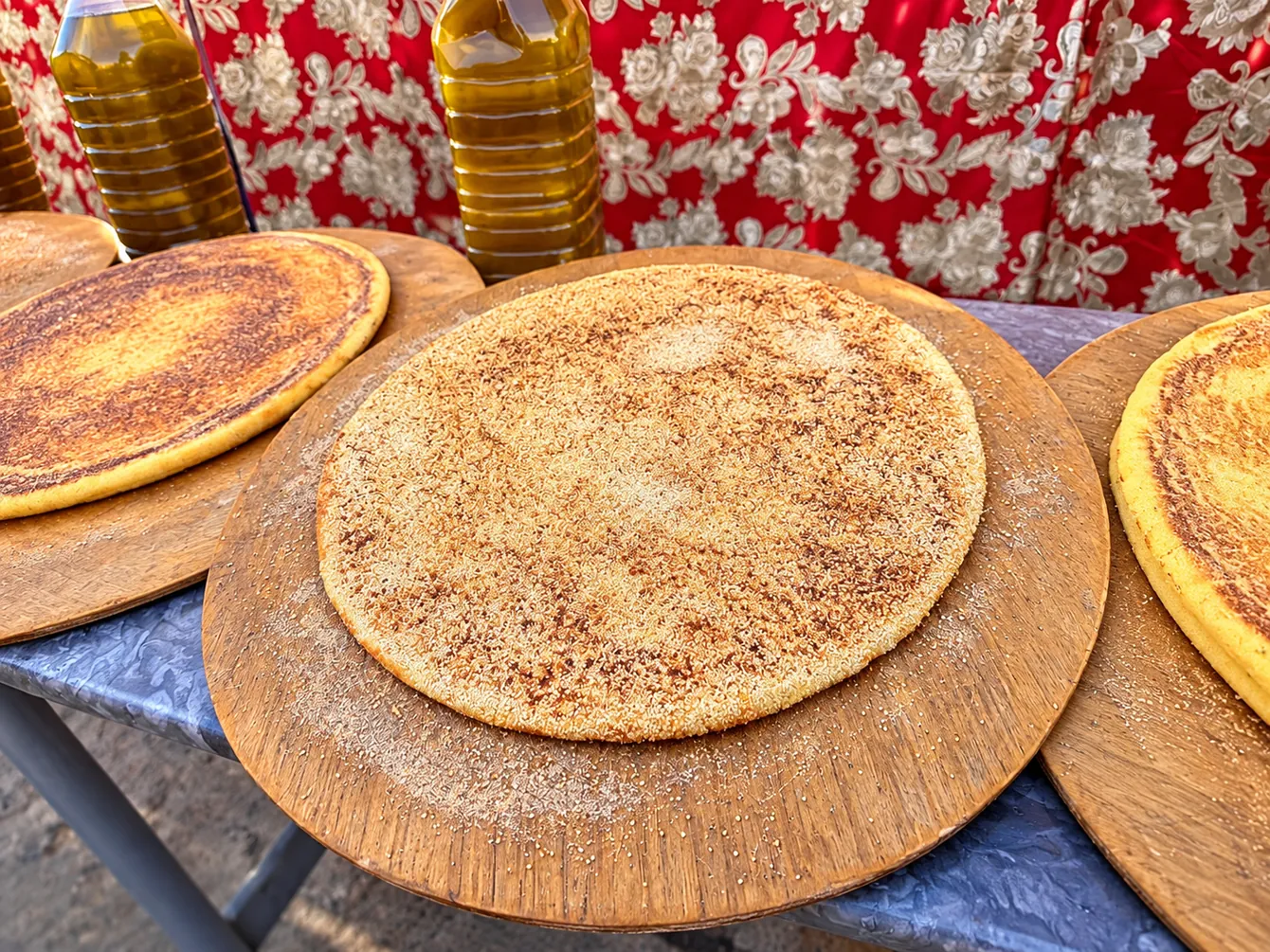
Khobz, batbout and harcha (bread and semolina bread)
On tables and market boards you often see khobz (round Moroccan bread), batbout (soft pan bread) and harcha (semolina bread). These familiar staples say a great deal about everyday village cooking: simple, nourishing and made for sharing.
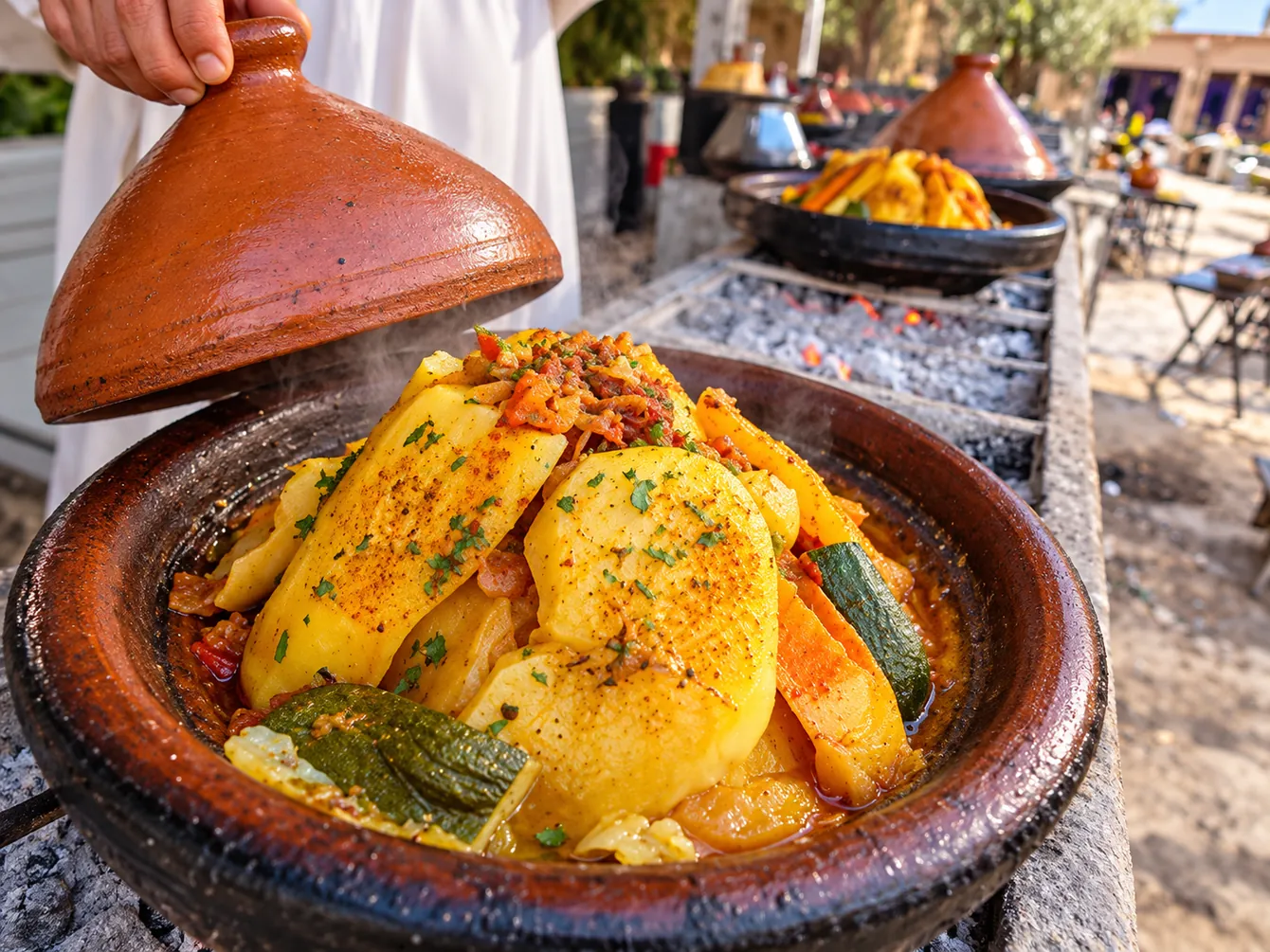
Tagine (slow-cooked stew in an earthenware dish)
A tagine is not only a dish but also a way of cooking. The earthenware pot keeps in the heat and lets flavours come together slowly. Around Aïn Hamra, tagine belongs to the slower rhythm of sharing a meal.
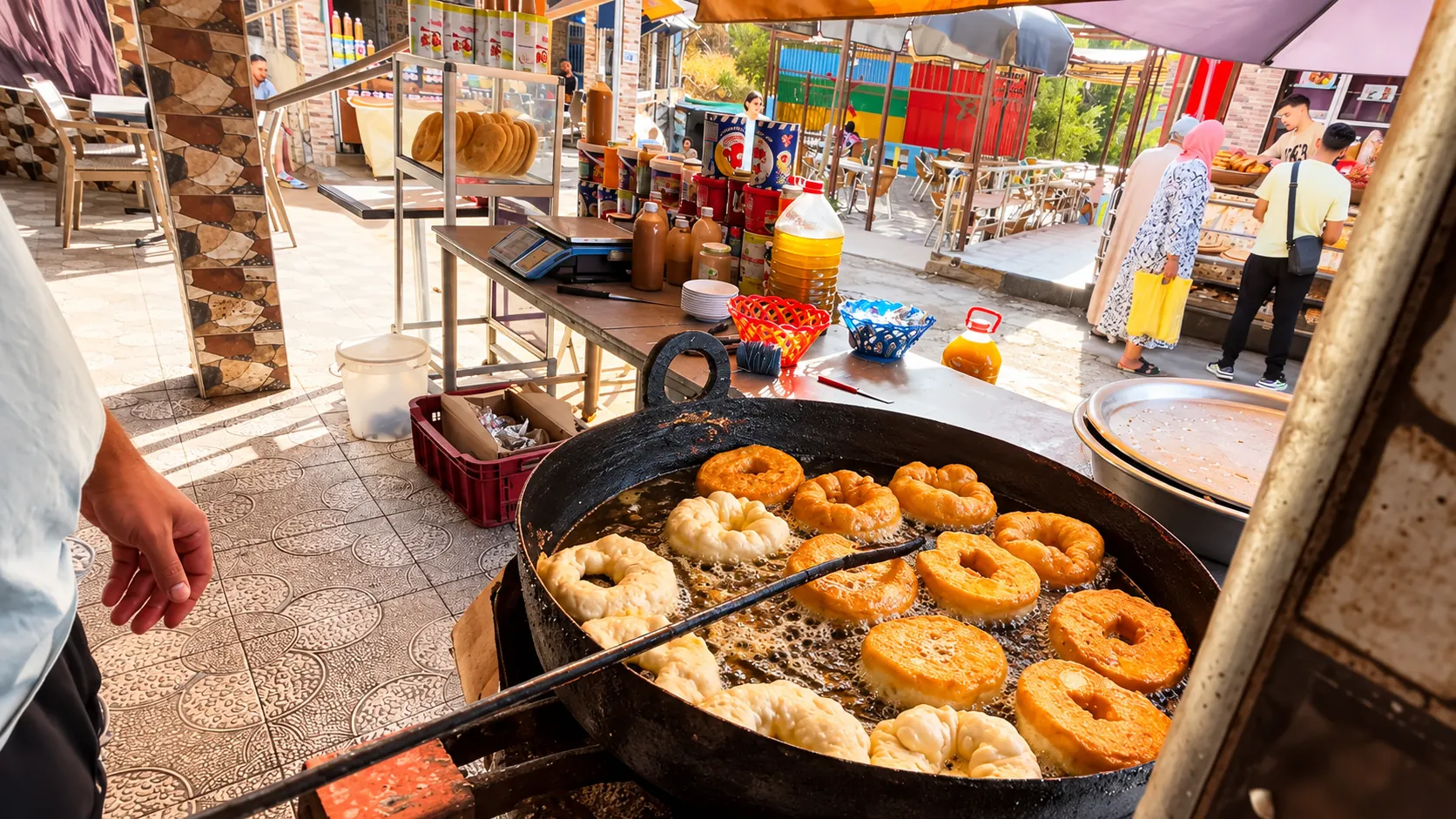
Sfenj (airy fried dough ring)
Sfenj is one of Morocco’s most familiar and much-loved street snacks. The dough is fried fresh and often served warm. The aroma, the sound of the oil and the direct exchange with the vendor make the stall an experience in itself.
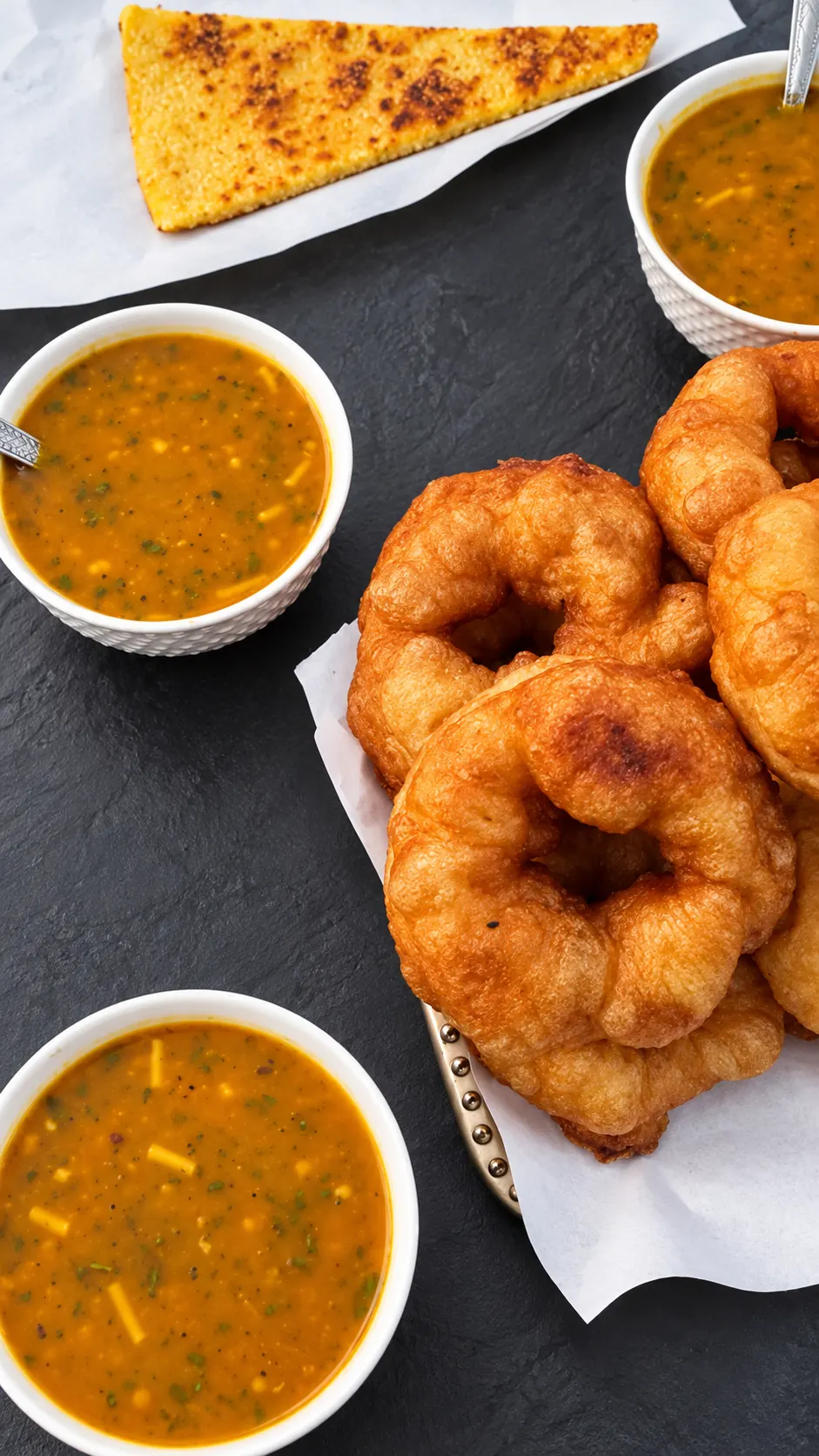
Harira, bissara and sfenj (soups and fried dough)
From harira (spiced Moroccan soup) and bissara (split-pea or fava-bean soup/purée) to sfenj (freshly fried dough rings), simple dishes are part of daily life. The precise recipe of the soup shown in the photo cannot be confirmed. Ask the cook what is being prepared that day.
More culture and food images
Additional images of market life, everyday scenes and local dishes that strengthen the atmosphere of the village.
Looking for an authentic escape?
A stay is booked only once the accommodation confirms it.